| |
Papers
Refereed Papers in the Last Three Years
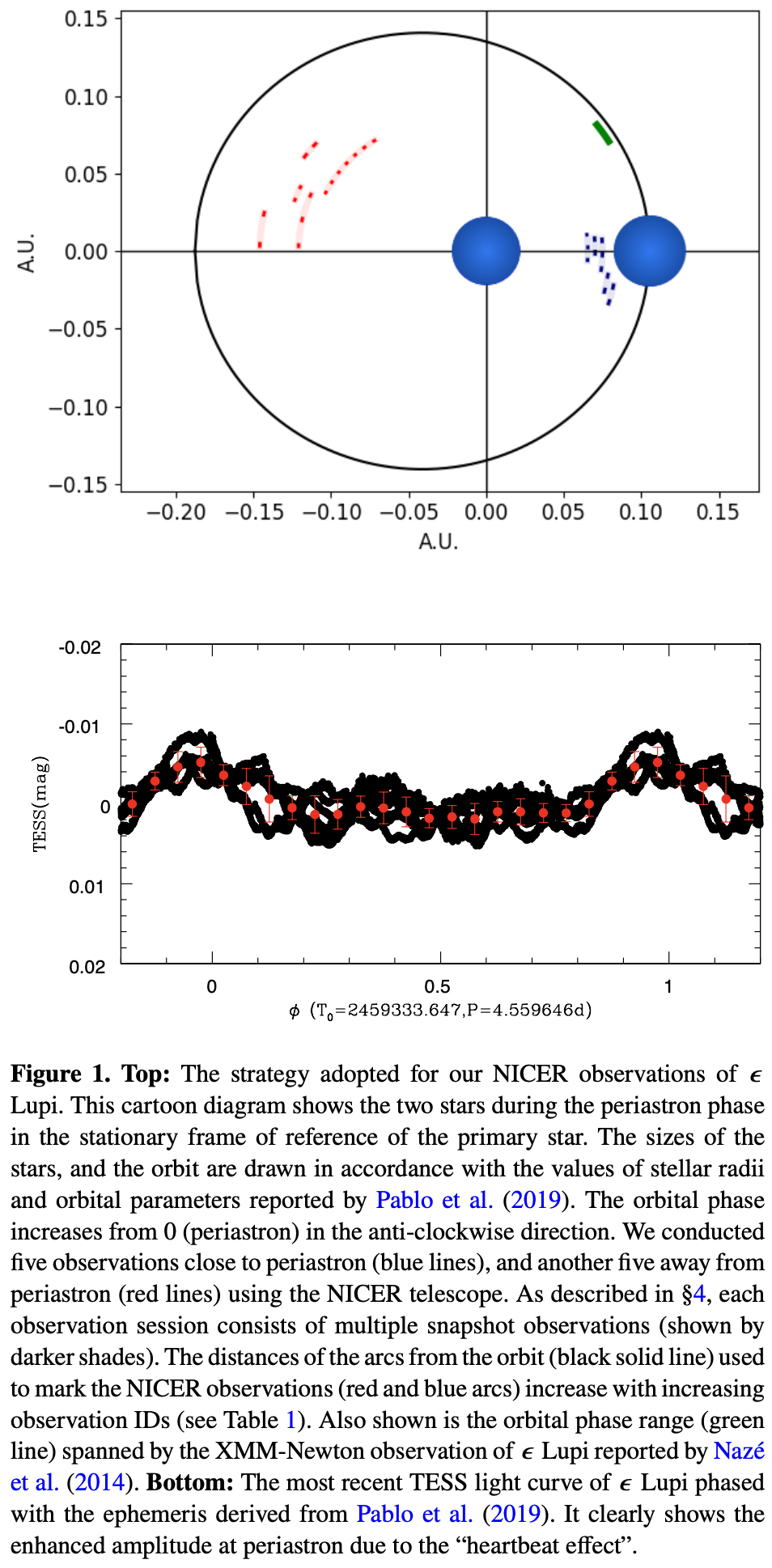
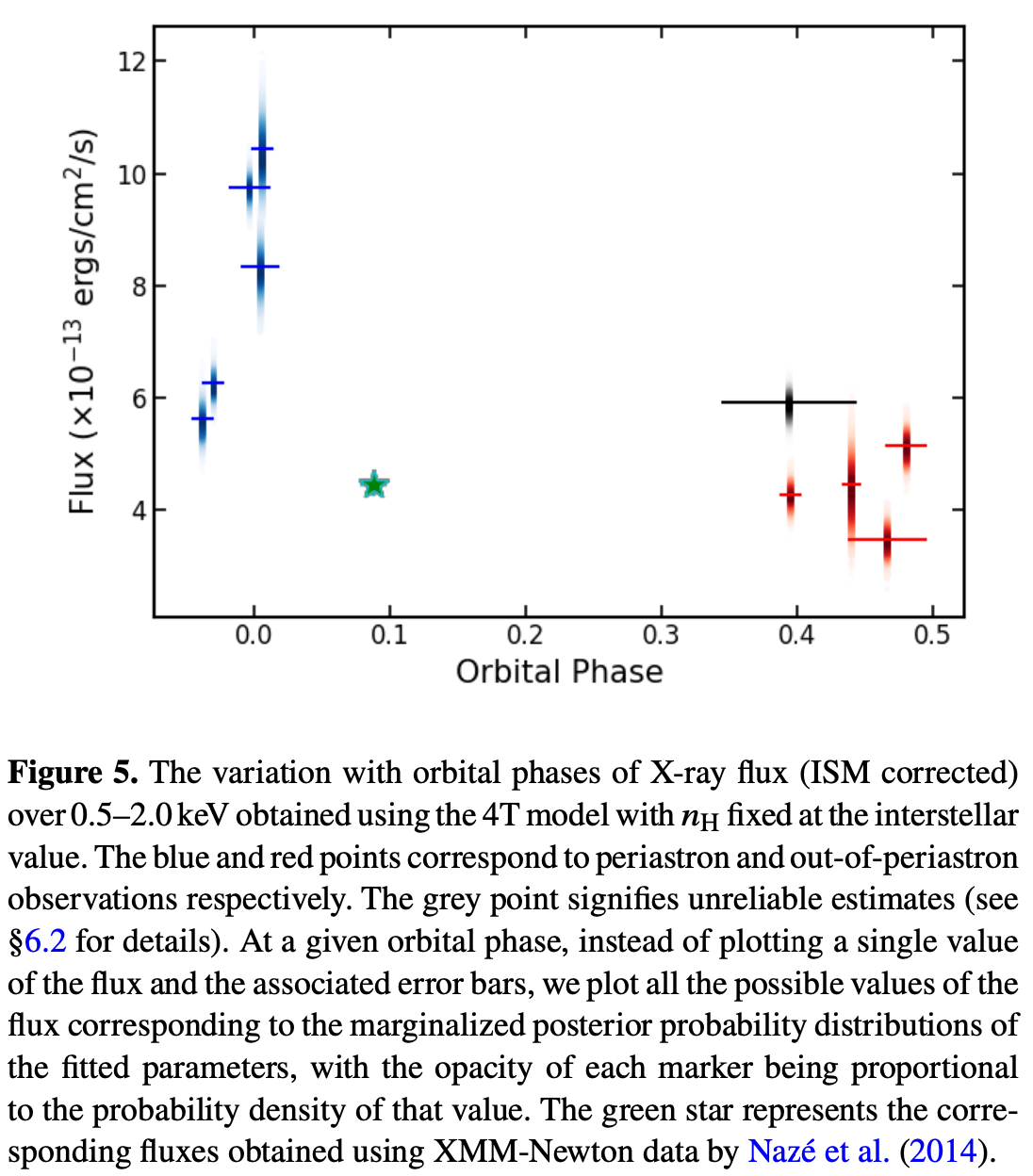
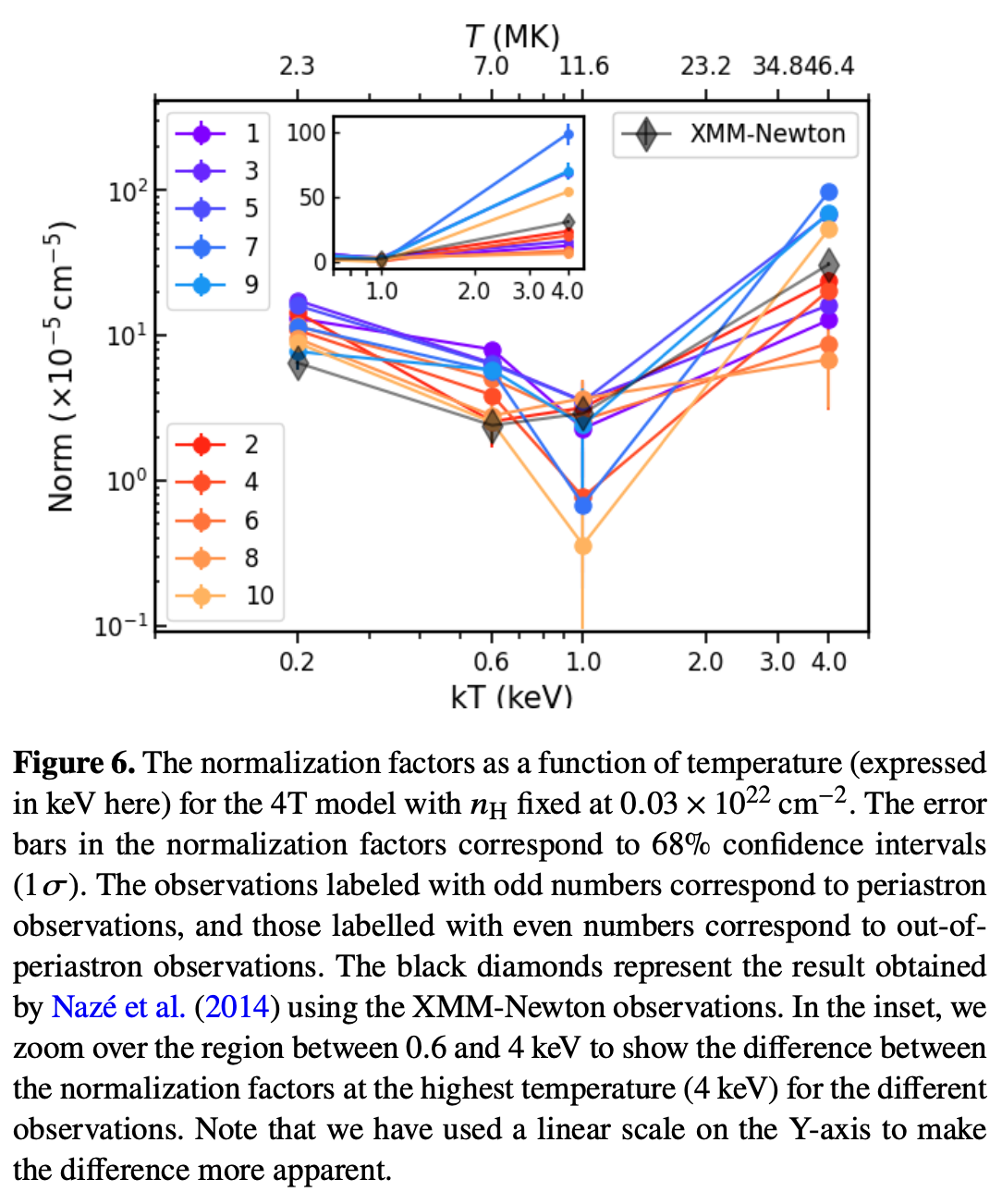
"Discovery of extraordinary X-ray emission from magnetospheric interaction in the unique binary stellar system epsilon Lupi," Das, et al., MNRAS, 522, 5805 (Jul. 2023).
The short-period binary system epsilon Lupi is the only short period binary consisting of two massive stars (both components are early B stars) in which both stars have magnetic fields. The orbit is eccentric (e=0.28) and it is hypothesized that increased interactions between the two stars' fields near periastron will increase magnetospheric X-ray emission. And indeed, that is what we find in a series of observations made with the NICER X-ray telescope aboard the ISS. The enhancement of the X-ray emission happens over a narrow range of time right at periastron, which is consistent with magnetic reconnection heating as the cause of the increased X-ray emission.
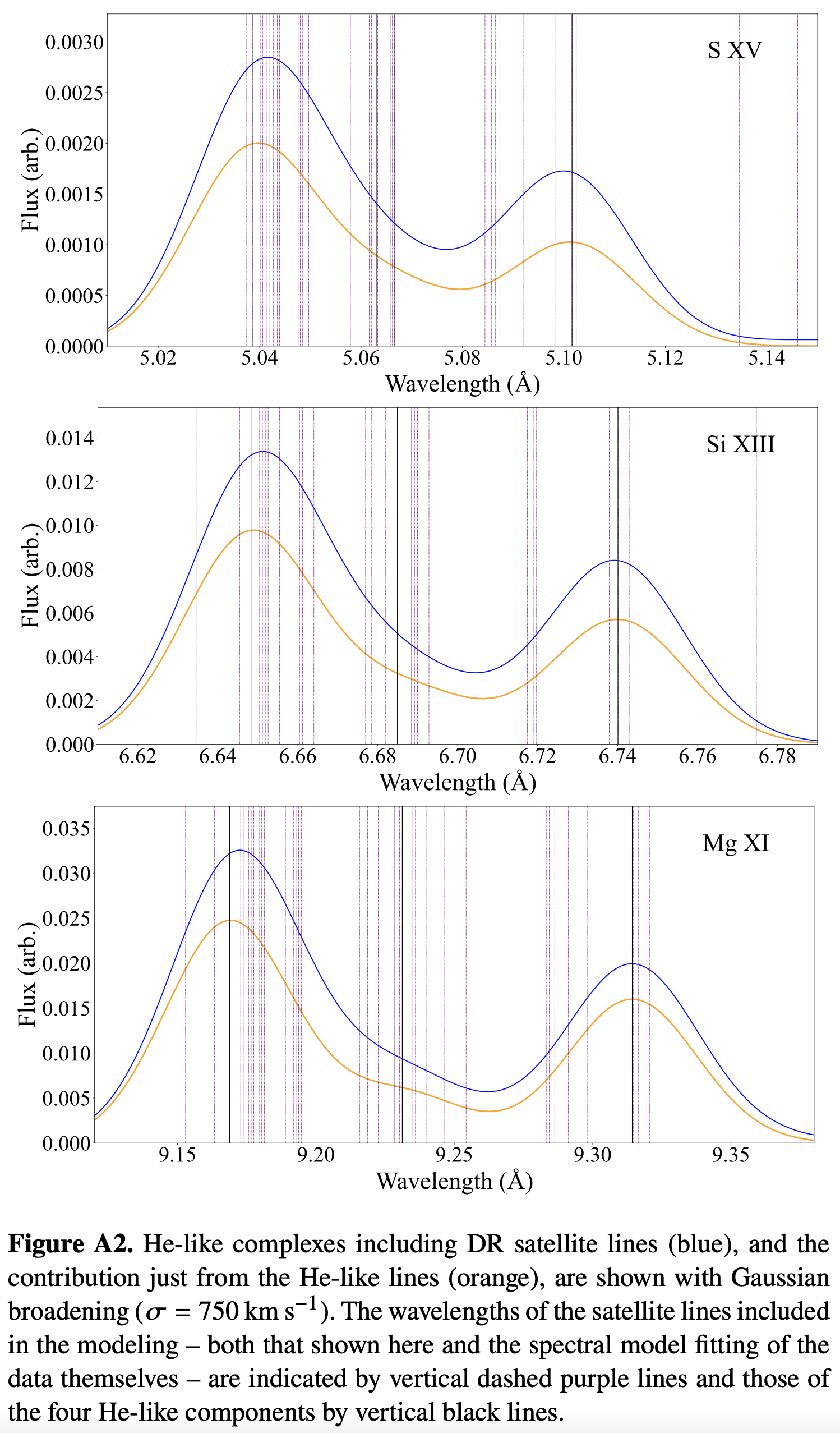
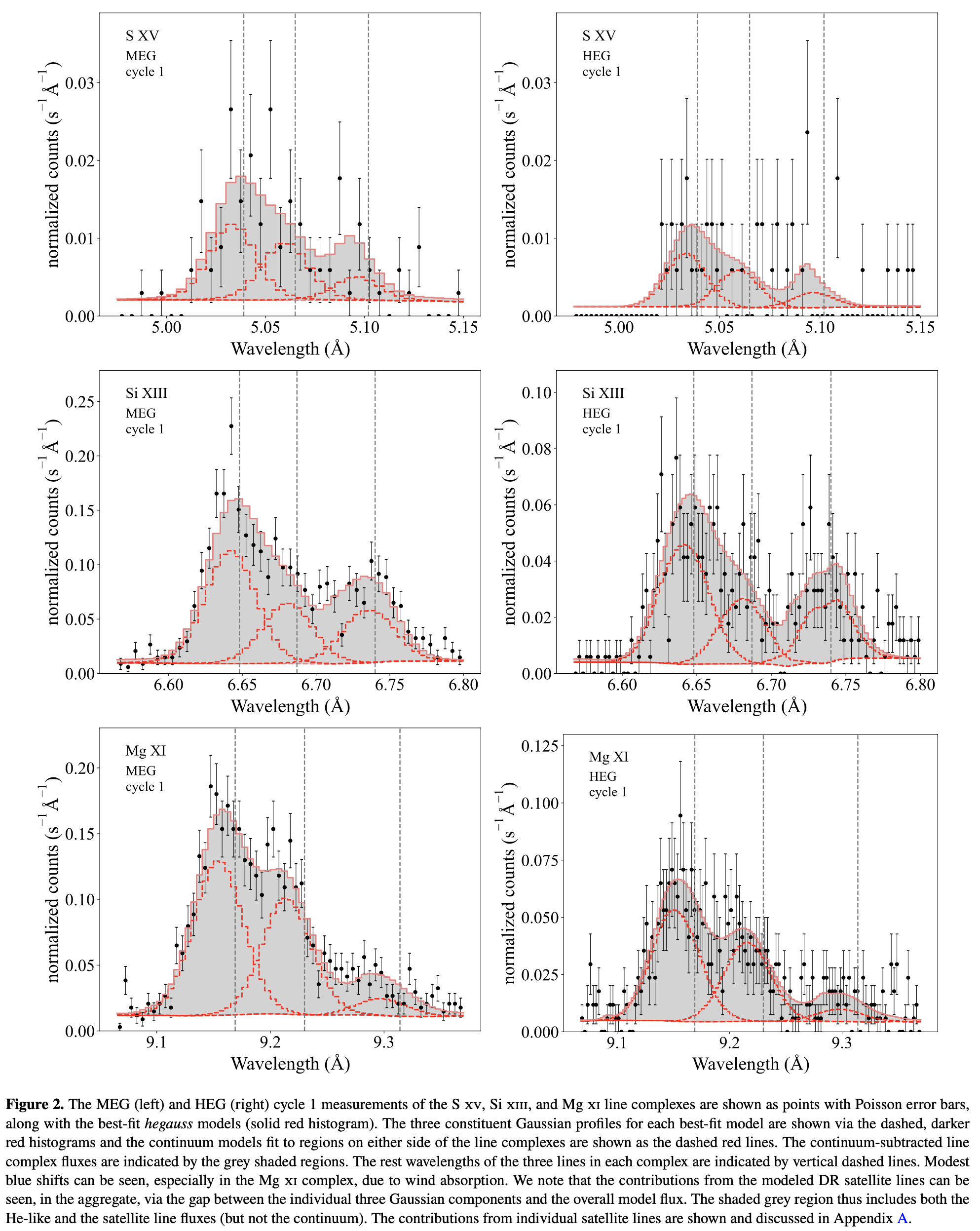
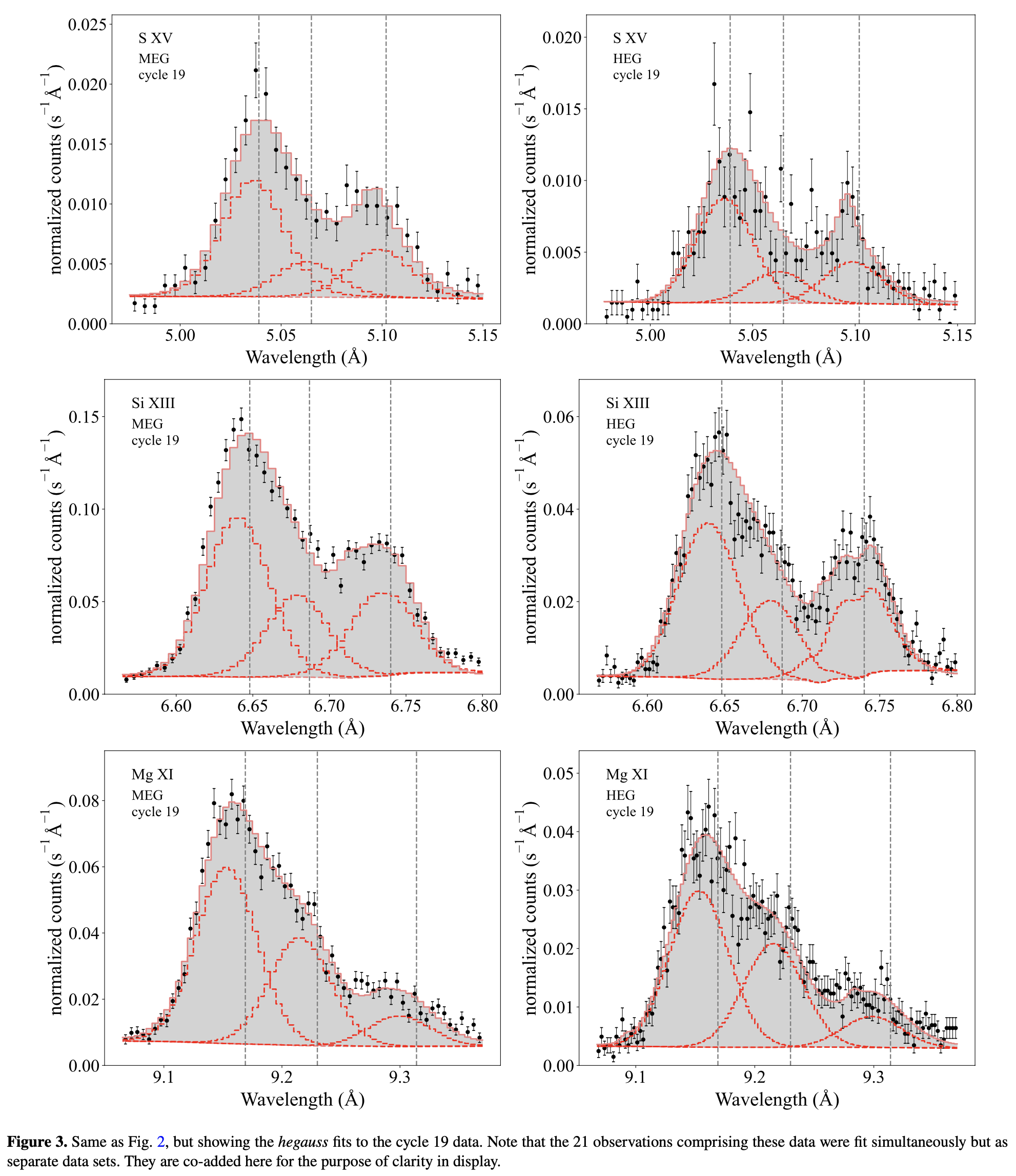
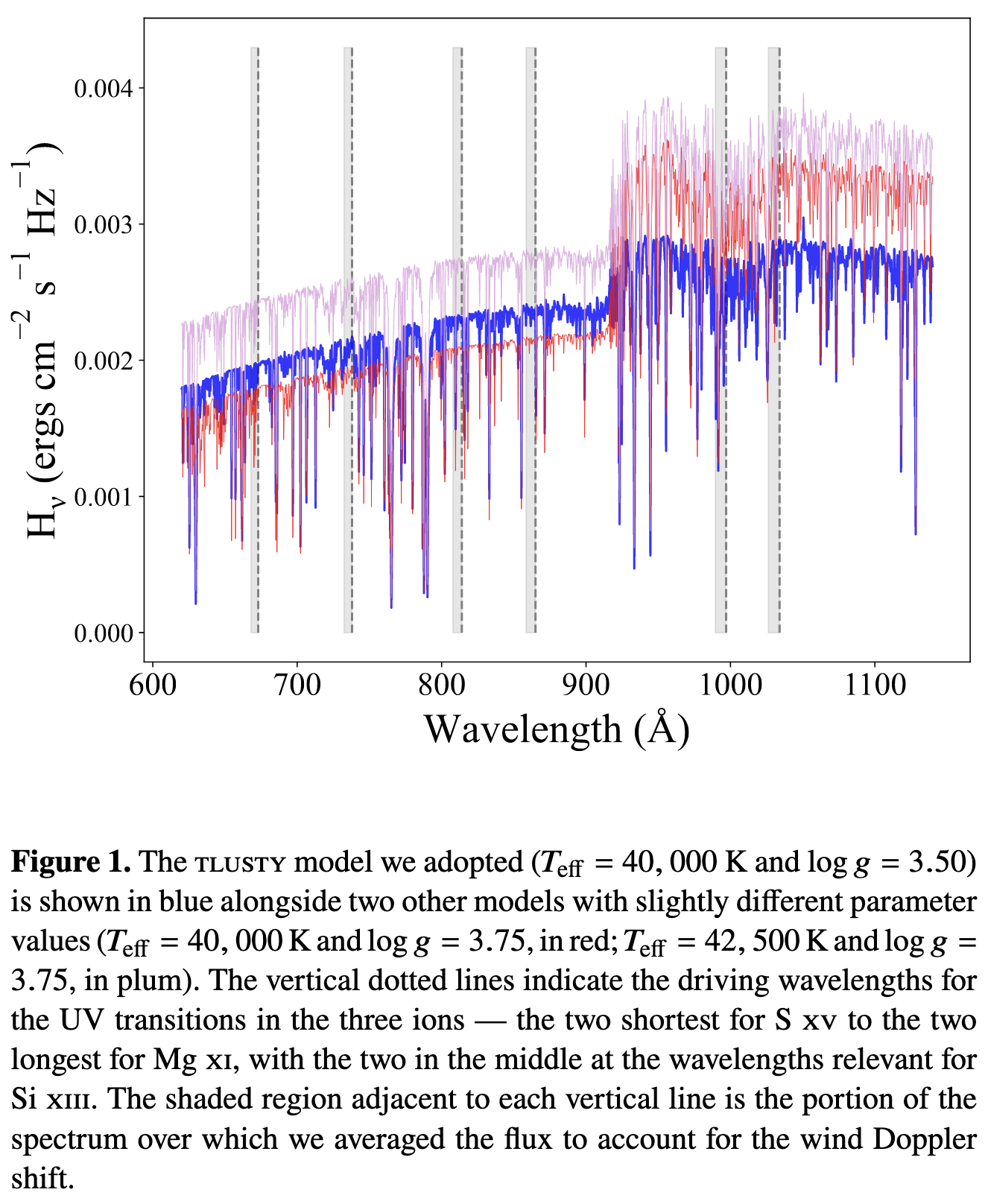
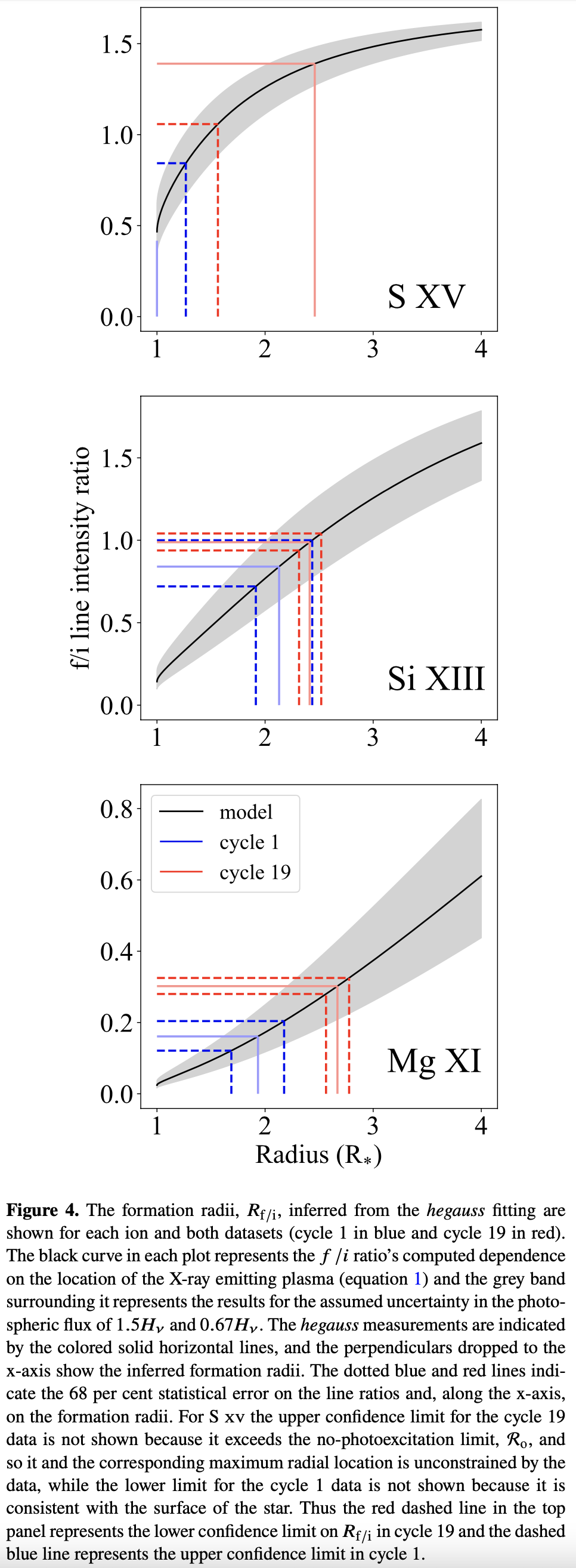
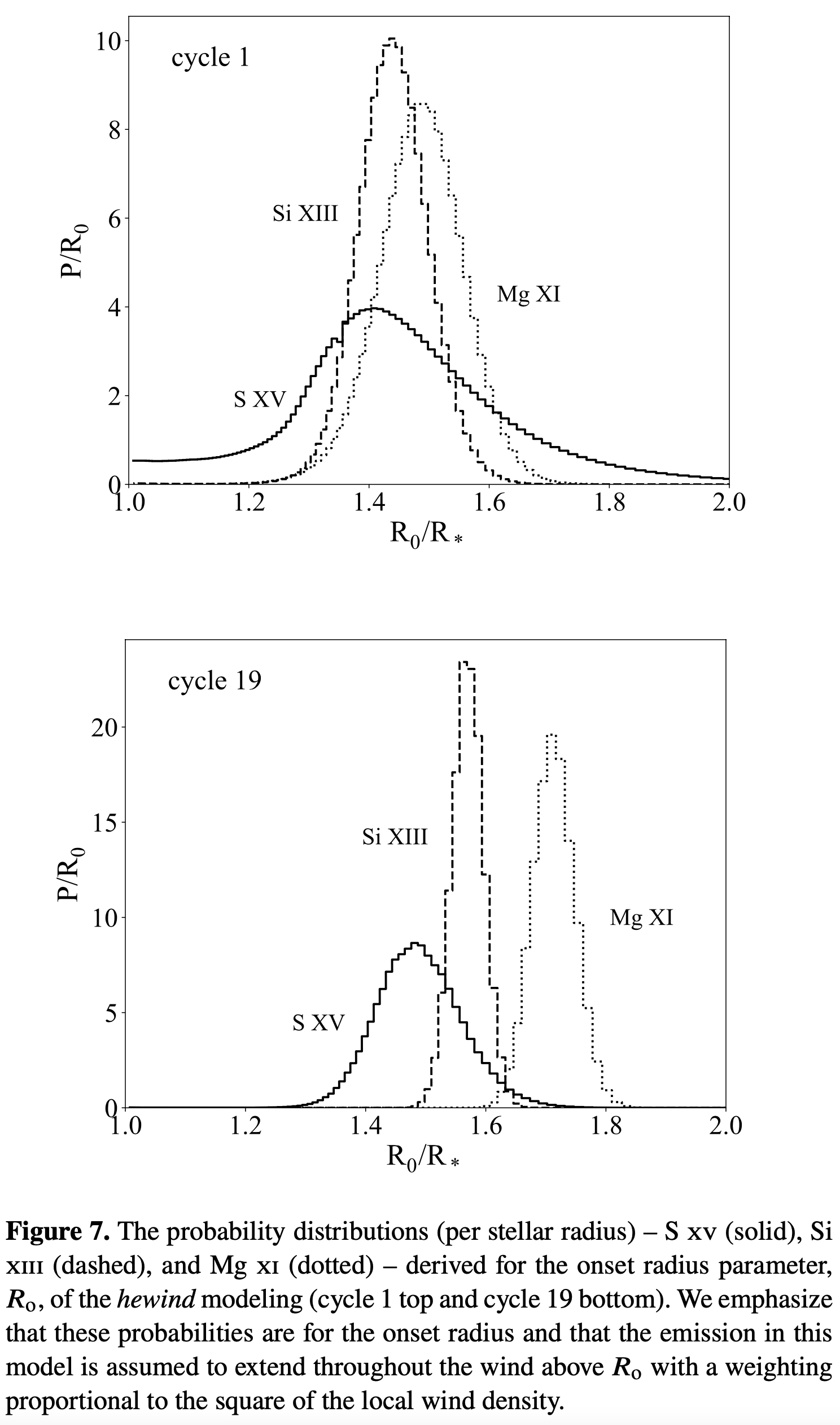
"Helium-like X-ray line complexes show that the hottest plasma on the O supergiant zeta Puppis is in its wind," Cohen, Overdorff, Leutenegger, Gagne, Petit, David-Uraz, MNRAS, 513, 1609 (Jun. 2022).
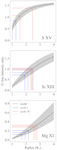
Certain emission lines in X-ray spectra are affected by the strength of the local UV radiation field, which enables the so-called helium-like forbidden-to-intercombination line strength ratio to be used as a diagnostic of the distance the hot, X-ray emitting plasma in O star winds is from the star's surface. Here we apply this diagnostic to two Chandra datasets of our favorite O star, zeta Puppis. The analysis we present includes detailed treatment of the many satellite lines that are blended with the helium-like diagnostic lines, which is something that hasn't been done before. We find a location of the X-ray plasma well-out in the wind flow (above r ~ 1.5 Rstar) and we find changes in the implied properties between the two sets of observations.
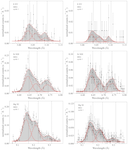
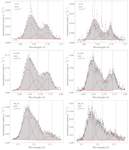
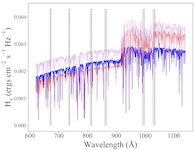
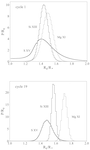
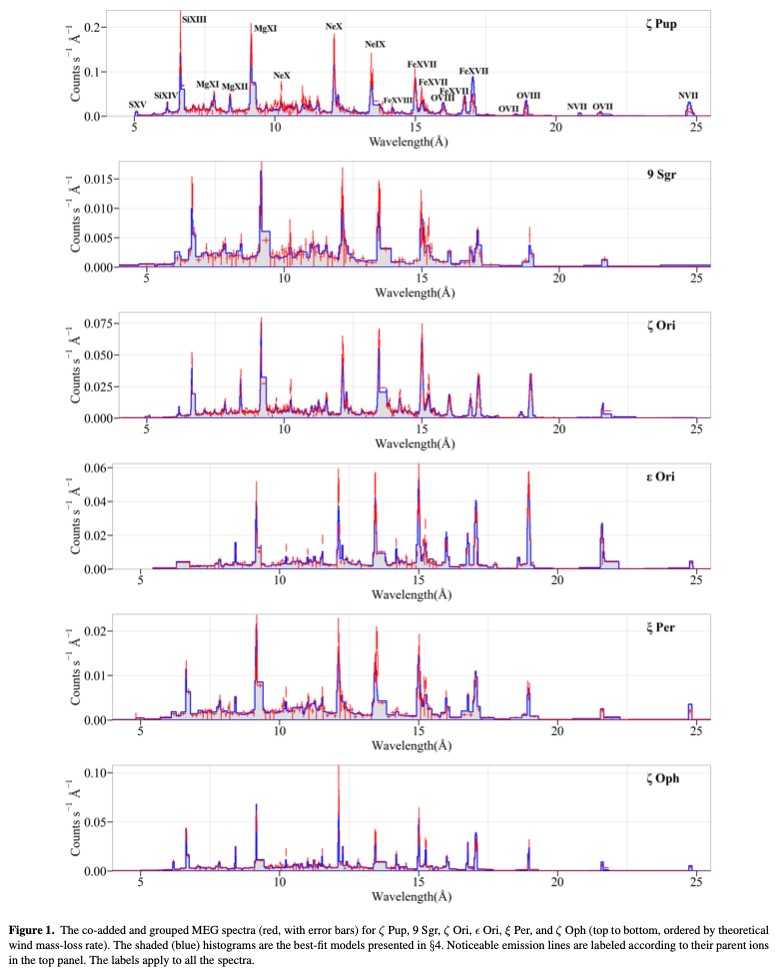
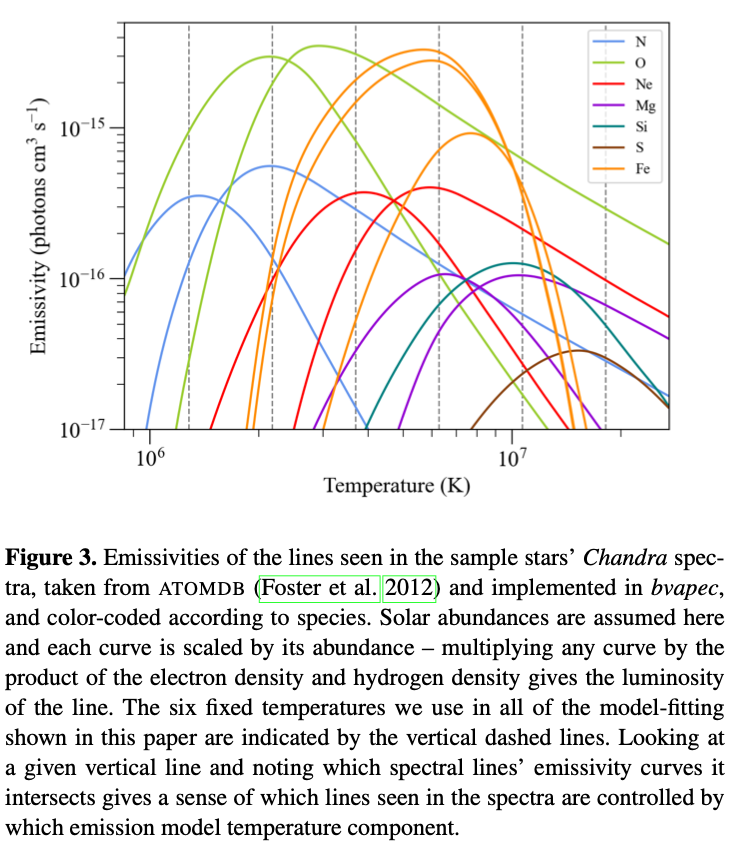
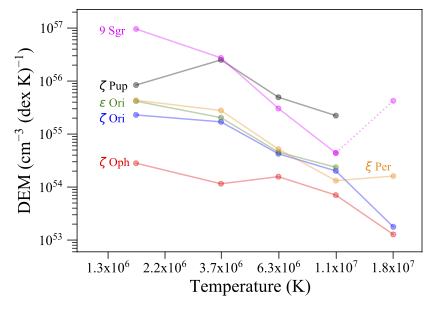
"Chandra grating spectroscopy of embedded wind shock X-ray emission from O stars shows low plasma temperatures and significant wind absorption," Cohen, Parts, Doskoch, Wang, Petit, Leutenegger, Gagne, MNRAS, 503, 715 (May 2021).
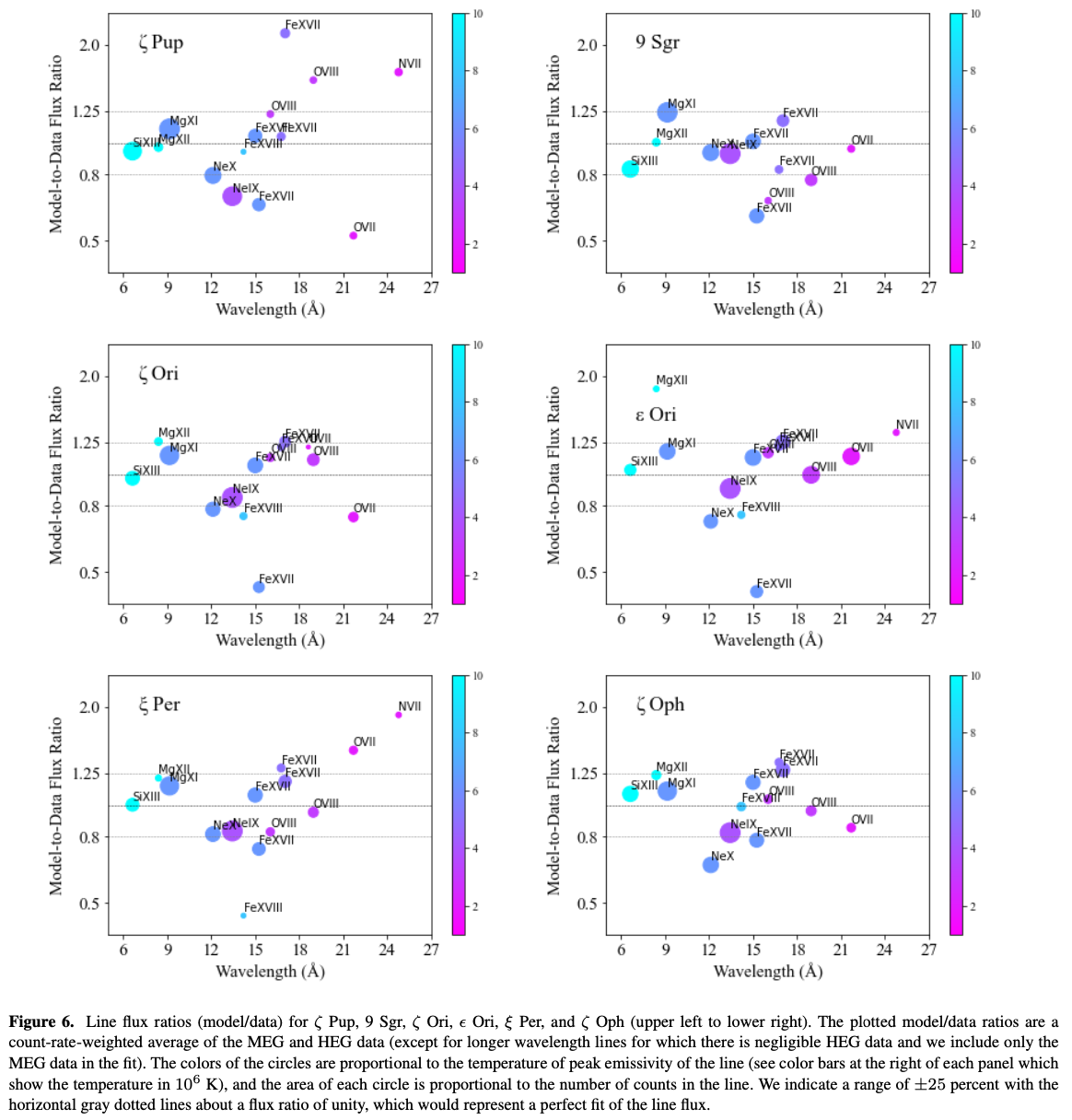
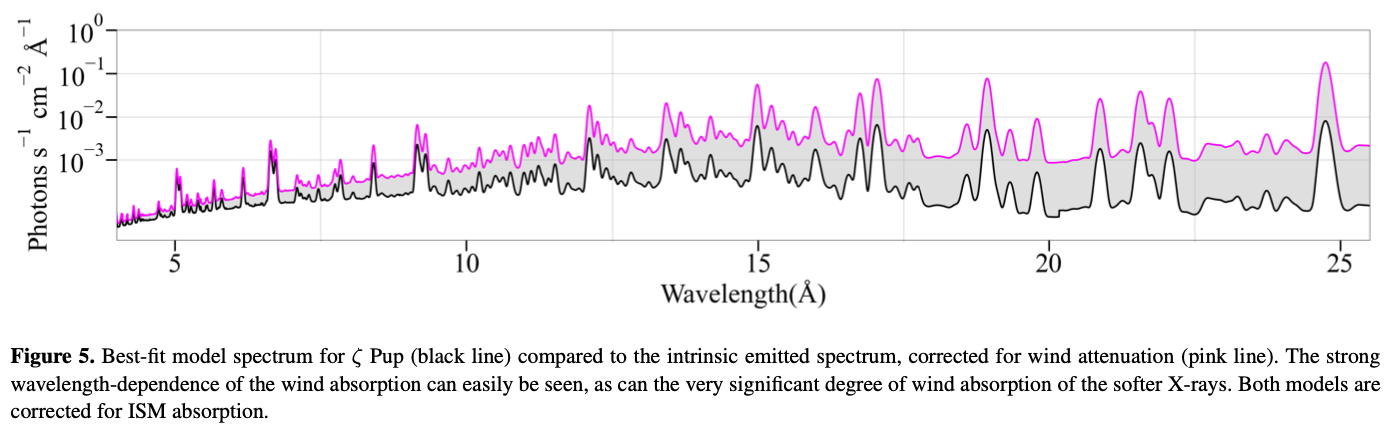
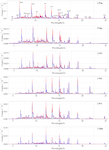
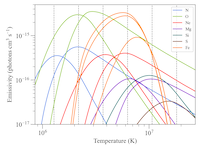
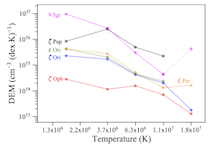
We fit the Chandra spectra of six O and B stars with X-ray emission primarily due to embedded wind shocks using a multi-temperature emission model (bvapec) combined with a wind absorption model (vwindtab). We find quite similar differential emission measure distributions for all the stars — consistent with a power law (n ~ -2.3) truncated at about T = 10 million K. X-ray absorption by the dominant, cool component of the wind is significant for all the stars. For ζ Pup, 95% of the generated soft X-rays (λ > 15 A) are absorbed.
Selected Meeting Proceedings
"Chandra grating spectroscopy finds a surprising change in the wind mass-loss rate of the O supergiant zeta Puppis over 18 years," Cohen, Rak, & Wang. A talk presented at the 19th High Energy Astrophysics Division meeting of the AAS (2022).
"The X-ray View of OB Star Wind Structure and Dynamics," Cohen, Circumstellar Dynamics at High Resolution, Foz do Iguacu, Brazil (2012). Appears in ASPC, 464, 267 (2012).
"X-ray Spectroscopy of the O2 If* star HD 93129A," Cohen, Four Decades of Research on Massive Stars, Lac Taureau (2011). Appears in ASPC, 465, 147 (2013). Also, from the same meeting and conference proceedings, "An X-ray Survey of Colliding Wind Binaries," Gagné, Fehon, Savoy, Cartagena, Cohen, & Owocki; and "The Physical Basis of the Lx/Lbol Empirical Law for O-Star X-rays," Owocki, Sundqvist, Cohen, & Gayley.
"X-ray Spectral Diagnostics of Activity in Massive Stars," Cohen, Wollman, & Leutenegger, IAU 272: Active OB Stars: Structure, Evolution, and Mass Loss, Paris (2010). Appears in IAU Symposium No. 272, eds. Neiner, Wade, Meynet, & Peters, Cambridge University Press, p. 348 (2011).
"X-ray Spectroscopy of the Radiation-Driven Winds of Massive Stars: Line Profile and Line Ratio Diagnostics," Cohen, 16th International Conference on Atomic Processes in Plasmas, Monterey, CA (2009). Appears in AIP conf. ser. 1161, p. 132 (2009).
"Modelling, Design and Diagnostics for a Photoionised Plasma Experiment," [or ADS] Hall, Durmaz, Mancini, Bailey, Rochau, Rosenberg, Cohen, Golovkin, MacFarlane, Sherril, Abdallah, Heeter, Foord, Glenzer, & Scott, High Energy Density Laboratory Astrophysics, St. Louis (2008). Appears in Astrophysics and Space Science, 322, 117 (2009).
"X-ray Emission from O Stars," Cohen, IAU 250: Massive Stars as Cosmic Engines, Kauai, Hawaii (2007). Appears in IAU Symposium No. 250, eds. Bresolin, Crowther, & Puls, Cambridge University Press, p. 17 (2008). This is a color version, with one extra figure (and with the transcribed questions and answers that followed the talk). There is also a black-and-white version, identical to the six-page article that appears in the bound conference proceedings.
"X-rays from Magnetically Channeled Winds of OB Stars," [or ADS] Cohen, IAU 250: Massive Stars as Cosmic Engines, Kauai, Hawaii (2007). Appears in IAU Symposium No. 250, eds. Bresolin, Crowther, & Puls, Cambridge University Press, p. 577 (2008).
"Quantitative Analysis of Resolved X-ray Emission Line Profiles of O Stars," Cohen, Leutenegger, & Townsend, International Workshop on Clumping in Hot-Star Winds, University of Potsdam, Germany (2007). To appear electronically: University of Potsdam (Universitats-Verlag).
"Resonance Scattering in the X-ray Emission Line Profiles of ζ Puppis," Leutenegger, Cohen, Kahn, Owocki, & Paerels, International Workshop on Clumping in Hot-Star Winds, University of Potsdam, Germany (2007). To appear electronically: University of Potsdam (Universitats-Verlag).
"Flow Dynamics and Plasma Heating of Spheromaks in SSX," Brown, Cothran, Cohen, Horwitz ('07), & Chaplin ('07), Innovative Confinement Concepts Workshop, University of Maryland, (2007). Appears in Journal of Fusion Energy.
"Diagnostics of Disks Around Hot Stars," Cohen, Hanson, Townsend, Bjorkman, & Gagné, The Nature and Evolution of Disks Around Hot Stars, Eastern Tennessee State University, Johnson City, TN (2004). Appears in ASP Conf. Ser., 337, p. 59 (2005).
"Analysis of Doppler-Broadened X-ray Emission Line Profiles from Hot Stars," Cohen, Kramer, & Owocki, MSSL Workshop on High-Resolution X-ray Spectroscopy, Dorking, Surrey, UK, (2002). Available via cd, and on-line.
"X-rays from Hot Stars and Young Stellar Objects,"
Gagné, Cohen, Owocki, & ud-Doula, X-rays in Sharp Focus: Chandra Science Symposium, St. Paul, MN (2001). Appears in ASP Conf. Ser., 262, p. 31 (2002).
"EUV/X-ray Emission and the Thermal and
Ionization Structure of B Star Winds," Cohen, Thermal and Ionization Aspects of Flows from Hot Stars: Observation and Theory, Tartu, Estonia, (1999). Appears in ASP Conf. Ser., 204, p. 65 (2000).
"X-ray Emission from Isolated Be Stars," Cohen, The Be Phenomenon in Early-Type Stars, IAU colloquium
175, Alicante, Spain, (1999). Appears in ASP Conf. Ser., 214, p. 156 (2000).
|
|